Review · JAIPUR TOURS
Agra, The City through Poetry
Agra’s poetry walk gives you a reason to look beyond its famous monuments and spend time with the city’s literary past. I like that it connects poets such as Ghalib and Nazir Akbarabadi to actual places in old Agra, and that a private guide can make room for your questions rather than rushing through a fixed group script.
I also like the mix of poetry, calligraphy, and street history: the language becomes easier to picture when you see where it developed and where people worked and traded. The main consideration is that this is a walking tour through the old city, so it suits you best if you are comfortable on your feet and happy to focus on culture rather than monument interiors.
- Begin at Jama Masjid: The walk starts at 5 pm beside one of Agra’s notable old-city landmarks.
- Stand near Ghalib’s birthplace: Hear about his writing and Urdu poetry in the late Mughal period.
- Visit a calligraphy workshop: Learn about Urdu script and literary culture during Mughal rule.
- Walk a former Silk Route shopping street: Read verses by Nazir Akbarabadi alongside details of the city’s social and economic life.
- Keep the pace personal: It’s a private tour, and your guide can help with photos.
- Take a poetry handout home: The included handout pairs selected verses with photographs.
Agra’s poetry belongs on the walking route
The Taj Mahal gives Agra its worldwide fame, but it is only one way into the city. This walk takes a literary route through the old town, using poets and their words to help you notice the places and people behind the monuments.
That approach makes the tour especially appealing if you’ve already seen Agra’s headline sights, or if you want to balance a monument-heavy visit with time in the city itself. Instead of treating poetry as a side note, your guide connects writers to Agra’s streets, language, and past.
The experience lasts about two to three hours and is private to your group. That gives you more scope to ask what you’re curious about, pause for photos, or spend a little longer on a subject that catches your attention. It is not a performance or a formal lecture. Expect a guided walk with short explanations and selected verses along the way.
Starting at Jama Masjid at 5 pm
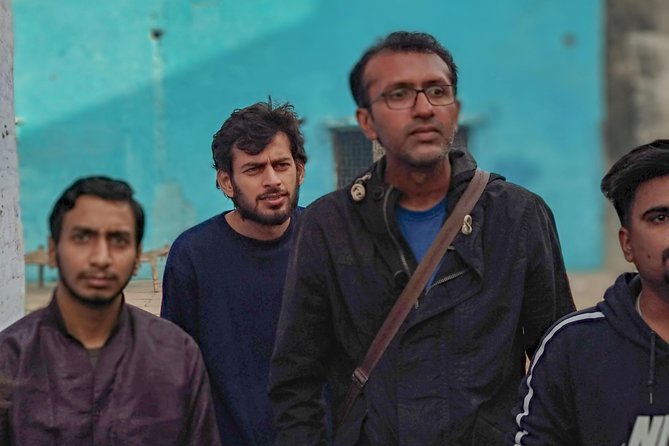
The meeting point is Jama Masjid in Agra’s old city, at Subash Bazar, Kinari Bazar, Hing ki Mandi, Mantola. The tour starts at 5 pm and returns to the same meeting point, so you won’t need to arrange a separate pickup at the end.
Beginning at the mosque gives the route a clear landmark, but the walk is not limited to one religious or literary tradition. An account of the experience describes visits to five or more sites across different religions. That broader view suits a city shaped by many communities, and it helps keep the tour from becoming a list of famous names alone.
The route and its stops make walking ability worth considering. The stated fitness level is moderate, and you should be comfortable spending a few hours on foot. The walk is also a chance to see the old city at street level, where shops, historic buildings, and everyday activity form part of the setting. The exact pace and time spent at each stop can vary with your group’s questions.
More Jaipur tours around Agra:
- Agra: Skip-the-Line Taj Mahal & Agra Fort Private Tour
★ 4.9 · 1,546 reviews - Agra: Taj Mahal Express Entry Tickets
★ 4.8 · 684 reviews - Agra: Taj Mahal and Mausoleum Guided Tour with Skip-the-Line
★ 4.8 · 631 reviews
Ghalib’s birthplace and the growth of Urdu poetry
One of the key stops is the birthplace of Mirza Ghalib. Here, your guide introduces his writing and the emergence of Urdu poetry in the late Mughal period. The value of this stop is not only the connection to a celebrated poet. It gives you a starting point for thinking about how literature and language developed in Agra’s political and cultural setting.
If you know Ghalib’s name but little about his work, the walk offers an approachable introduction. If you already read Urdu poetry, you can use the private format to ask more specific questions. The tour information does not promise an extended literary seminar, so it’s best to think of this as a concise, place-based introduction rather than a deep study of his writing.
As with any birthplace visit, the appeal rests partly on context. The stop is most rewarding when you connect the location to what the guide explains, rather than expecting a major museum or a long list of exhibits. Ask questions as you go; that is one of the practical advantages of having the guide to yourselves.
Urdu calligraphy, seen up close
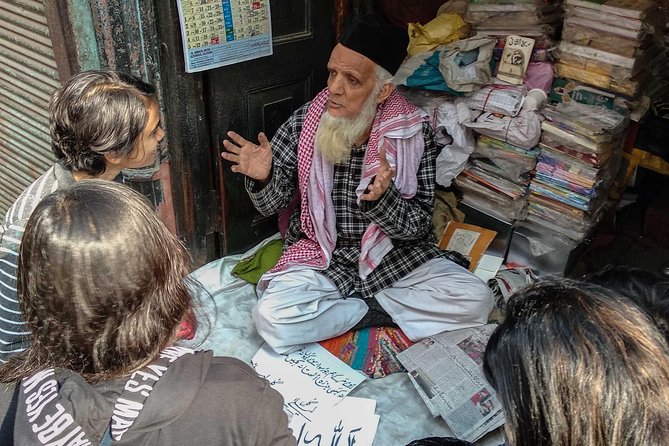
The walk also visits a calligraphy workshop. Urdu is written in a distinctive script, and this stop links the visual craft of writing with the development of language and literature under Mughal rule.
That connection matters because poetry is not only heard or read as words on a page. Its script is part of how the language is experienced. At the workshop, you can ask about calligraphy and the relationship between written form and literary culture. The description does not specify whether you will make anything yourself, so don’t book expecting a hands-on class. Treat it as a chance to see the craft and discuss its place in the city’s story.
For visitors who don’t know Urdu, this stop can make the walk more accessible. You don’t need to read the script to appreciate that writing itself carries artistic meaning. It also gives the route a change of pace between historical sites and the street walk.
A Silk Route shopping street and Nazir Akbarabadi
A particularly useful part of the walk follows a 16th-century shopping street once tied to the Silk Route. Here, your guide introduces verses by Nazir Akbarabadi and explains how his poetry recorded social and economic life.
This is where the tour’s literary focus meets the everyday city. Rather than seeing a historic street only as a backdrop, you’ll consider what it can tell you about trade, work, and ordinary people. The verses help put human detail into the history, while the street itself gives you a sense of how commerce shaped Agra.
The walk does not promise a shopping stop or a particular amount of free time. Go for the history and the poetry, not as a planned market-buying excursion. The old city is part of the experience, but you should be prepared for a walking route rather than a quiet gallery setting.
Same city, a different kind of day:
- Private Guided Taj Mahal Tour with Skip The Line Entry Ticket
★ 5.0 · 562 reviews - Agra: Taj Mahal & Mausoleum Skip-the-Line Tour with Options
★ 4.9 · 456 reviews - Private Guided Tour of Agra
★ 5.0 · 420 reviews - Taj Mahal, Agra Fort, Baby Taj & Mehtab Bagh Private City Tour
★ 5.0 · 391 reviews
Khankhana Katra and Abdur Rahim Khankhana
The route also includes Khankhana Katra, where the group reads poetry by Abdur Rahim Khankhana. The scheduled stop is about 15 minutes, making it a brief but focused encounter with another literary voice.
This short pause helps broaden the tour beyond Ghalib and Nazir Akbarabadi. It also reinforces the walk’s central idea: Agra’s poetry is tied to places and to a wider history of language and culture. If a particular poet interests you, ask your guide for more context while you’re there. With a private group, you can shape the discussion more than you could on a large tour.
The stop is listed with free admission. The tour information does not provide details about what you’ll see inside or how much time you’ll spend beyond the stated 15 minutes, so keep expectations modest and focus on the guide’s explanation and the verses.
A personal pace, with room for questions and photos
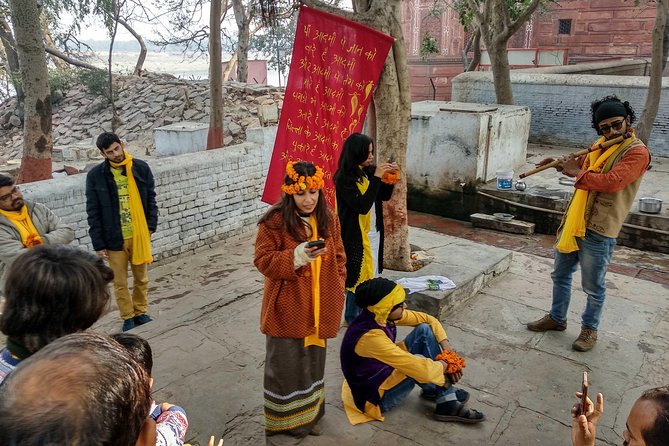
Because the activity is private, only your group joins the walk. That is a meaningful advantage for a tour built around language and history. You can ask for a term to be explained again, connect a poem to a question about the city, or take time for a photograph without having to keep pace with a larger crowd.
A guide named Kaleem has led the walk, and one account describes him as deeply connected to the city, its people, and its culture. Guide assignments can vary, so don’t assume he will lead your departure. The useful point is that the tour is designed around a local guide who can give context as you move among several sites.
Photo help is also included as a feature. That does not guarantee a dedicated photography session, but it can be handy if you’re travelling alone or want a picture of your group. The handout, which includes poetry verses and photographs, gives you something to revisit after the walk and helps preserve the literary thread once you’re back among Agra’s other sights.
Is $44.28 good value?
At $44.28 per person, this costs more than a basic group walk, but the private format changes the value calculation. You are paying for a guide’s attention, the freedom to ask questions, and a route built around a subject that is easy to miss if you visit Agra only for its best-known monument.
The handout and photo assistance add practical value, while the walk itself covers several cultural stops over two to three hours. If you care about poetry, Urdu, or local history, the price is easier to justify. If you mainly want a quick orientation to Agra or prefer a tour focused on major monuments, this may not be the best use of your budget.
The rating is 4.9 from 15 ratings, with 100 percent recommending the experience. That is a strong signal, though the number of ratings is modest. The particularly useful detail is the emphasis on a guide’s care for Agra and its culture, since the quality of this tour depends heavily on how well the guide connects places to their stories.
Before you book
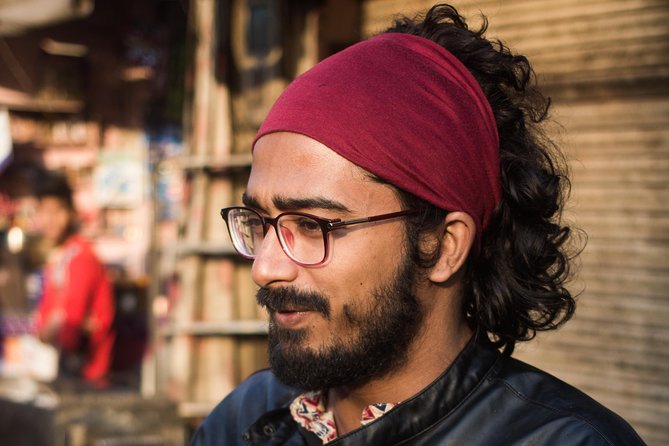
The activity begins at 5 pm, lasts about two to three hours, and ends where it starts. It is near public transportation, but the information does not specify a particular station or route, so check your own transport plans before setting out.
You’ll receive booking confirmation at the time of booking. Free cancellation is available until 24 hours before the start time; cancellations made later are not refunded, and changes inside that window are not accepted. The tour requires good weather and a minimum number of participants. If poor weather or the minimum requirement prevents the tour from going ahead, you’ll be offered a different date or experience, or a full refund.
Should you book Agra’s poetry walk?
Book this if you want to understand Agra through more than its monuments and enjoy learning through places, language, and short readings. It is especially well suited to curious visitors who value a private guide and are comfortable walking through the old city.
Skip it if you need a seated activity, want a monument-focused tour, or are looking for a hands-on calligraphy lesson. For the right visitor, this walk offers something more personal than a standard city overview: a way to connect Agra’s streets with the writers who gave them a place in Urdu literature.
FAQ
How long does the poetry walk last?
The tour lasts approximately two to three hours.
What time does the tour start?
The listed start time is 5 pm.
Where does the walk begin and end?
It begins at Jama Masjid in Agra’s old city and ends back at the same meeting point.
Is this a private tour?
Yes. Only your group participates.
What is the price?
The listed price is $44.28 per person.
Can I cancel for a refund?
You can cancel at least 24 hours before the start time for a full refund. Cancellations made less than 24 hours before the start time are not refunded.
Just added around Agra
- Approved Tour Guide in Agra for Full Day Sightseeing★ 5.0 · 9 reviews
- National Chambal Sanctuary and Alligator Day Tour from Agra★ 5.0 · 5 reviews
- Old Agra City Short Cultural Walk★ 5.0 · 7 reviews
- Stepwell & Fatehpur Sikri stops Agra to/from Sawai madhopur city★ 5.0 · 3 reviews
- Taj Mahal Handicraft Walk: Explore True India with Artisans★ 5.0 · 16 reviews
- LOCAL Agra :Taj Mahal Sunrise / Sunset Private Tour by Car★ 5.0 · 6 reviews
- Agra Full-day Tour Taj Mahal, Agra Fort & Secret Walking Tour with Private Car★ 5.0 · 17 reviews
- Half Day Private Tour of Taj Mahal & Agra Fort From Agra★ 5.0 · 8 reviews
Jaipur Tours, compared.