
Review · PUSHKAR TOURS
Spiritual City Walking Tour-THE Pushkar Route
Pushkar’s spiritual life is easiest to understand at street level: a gurdwara, old temples and lakeside ghats all sit within a walkable town. This small-group tour links those places with explanations of Hindu and Sikh traditions, giving you more context than a temple-hopping walk on your own.
I like two things in particular: the route brings together different faiths, and the guide can explain rituals and local customs as you encounter them. The included masala chai and Malpua also add a welcome taste of Pushkar. One point to check before you go: tour versions and refreshment details are not always described consistently, so confirm your chosen route and what it includes.
Key points to know
- A multi-faith route: Visit a Sikh gurdwara, temples dedicated to Vishnu and Shiva, the Brahma Temple, and Pushkar’s sacred ghats.
- A small group: The maximum group size is six, which should leave room for questions and conversation.
- Local guides: Manish, Maneesh and Vishwanath are among the guides named for this experience. Your guide may vary.
- A sweet local snack: Malpua, a syrup-coated pancake, and tea are included. This is a snack, not a full meal.
- A modest price: At $6.76 per person, the guided route and included entrance fees offer good value, provided the booked version matches your plans.
- Clarify the finish: Pickup and drop-off are offered, but confirm where the walk ends and whether hotel drop-off is included for your tour.
Why a guided walk makes sense in Pushkar
Pushkar is a compact town, but its sacred sites are not just landmarks to tick off. The meaning of a temple image, a prayer at a ghat or a ritual performed by a family can be hard to grasp without someone explaining what you are seeing. A local guide can supply that context while you move between sites.
The tour’s focus is religion and local history, not just architecture. You can ask questions about Hinduism, Sikhism and the role Pushkar plays for pilgrims. The route also includes different kinds of sacred places, so the experience is broader than a visit to the town’s best-known temple alone.
The maximum group size is six. That is a useful limit for a walking tour: you are less likely to feel lost in a crowd, and a smaller group makes it easier to hear explanations and ask questions. The pace and detail have suited people looking for a thoughtful introduction, though the tour lasts anywhere from about one to three hours depending on the version and stops.
More Pushkar trips around Jaipur:
- Afternoon Walk Tour with Sunset & Fire Ritual -The Pushkar Route
★ 5.0 · 119 reviews - Evening Walking Tour with Fire Rituals-The Pushkar Route
★ 4.9 · 108 reviews - Spiritual Walking tour with Puja Ceremony -The Pushkar Route
★ 5.0 · 101 reviews
Starting at Gurudwara Sahib
The walk begins at Gurudwara Sahib, where the guide introduces Sikhism and explains why Pushkar matters to the Sikh community. This is a valuable first stop because it widens the story beyond the Hindu temples most people expect to see here.
You will spend about 30 minutes at the gurdwara. That gives the guide time to explain the site and its place in local religious life, rather than simply pointing it out on the way past. If you have questions about Sikh beliefs or worship, this is a good moment to ask.
The tour includes more than one version, so check that the gurdwara is part of your booked route. It appears in the stated stop sequence, but one account of a tour variation describes a separate visit to the Sikh temple. Confirming in advance can prevent a mismatch between what you expect and what your particular walk covers.
Varaha and Old Rangji: stonework and stories
Varaha Temple is the next major stop. Dedicated to Vishnu in his boar form, it is described as a heavy-stone structure in a Rajasthani haveli style, set within a walled compound. The present statue dates to 1784, while the original temple is described as having been 150 feet high.
Give this stop around 25 minutes. The guide can help you connect its design and religious imagery to the larger story of Vishnu. As at any active place of worship, the experience is about more than the building itself, so follow the guide’s directions and be respectful of people there to pray.
Old Rangji Temple, also known as Rama Vaikuntha Temple, gets about 15 minutes. It is noted for its workmanship and Rajasthani architectural style. This is a shorter visit, so treat it as a focused look rather than a long architectural tour.
The two stops work well together. You get different examples of temple design and a chance to ask how Hindu traditions appear in the images, names and forms of worship around town. If architecture is your main interest, keep in mind that the walk’s emphasis is on spiritual meaning and local history, not an exhaustive study of each building.
Atmateshwar and the Shiva family
Atmateshwar Mahadev Mandir is described as Pushkar’s oldest Shiva temple. The visit lasts about 25 minutes, and the guide points out a statue of Lord Shiva with his family.
For a first-time visitor, this is a useful way to encounter a different strand of Hindu worship from the Vishnu-focused temples earlier in the route. A guide can explain who the figures represent and why the temple matters locally. You do not need prior knowledge of Hinduism to follow along, but this is a good place to ask for clarification if the names and stories begin to blur together.
The itinerary lists admission as free here. More broadly, entrance fees are included where applicable, while optional holy rituals and ceremonies are not. If you want to take part in a blessing or other ritual, ask what it involves and whether there is a separate charge before agreeing.
More walking tours around Jaipur:
- Jaipur Bazaar & Food Walking Tour
★ 5.0 · 281 reviews - Heritage Walk & Street Food Tasting in Jaipur
★ 5.0 · 158 reviews - Magical Walk of Jaipur
★ 5.0 · 121 reviews - Cultural Walk and Food Tasting In Jaipur
★ 5.0 · 118 reviews
Brahma Temple: Pushkar’s best-known shrine
The Brahma Temple is the tour’s headline religious stop. The guide explains why Pushkar is known for having the world’s only temple to Brahma, as well as the temple’s architecture and mythology. Plan on about 30 minutes.
This is where the town’s religious identity comes into sharp focus. The guide’s explanation can make the mythology easier to follow and help you understand why pilgrims come here. The temple is also a place of active worship, so expect to share the space with people whose visit is devotional, not sightseeing.
Some versions of the walk include a ceremony or blessing at the Brahma Temple or nearby ghat. It is not safe to assume that this is part of every tour, and charges for rituals are excluded. If participating matters to you, confirm the details when arranging the tour.
Pushkar Lake and the ghats
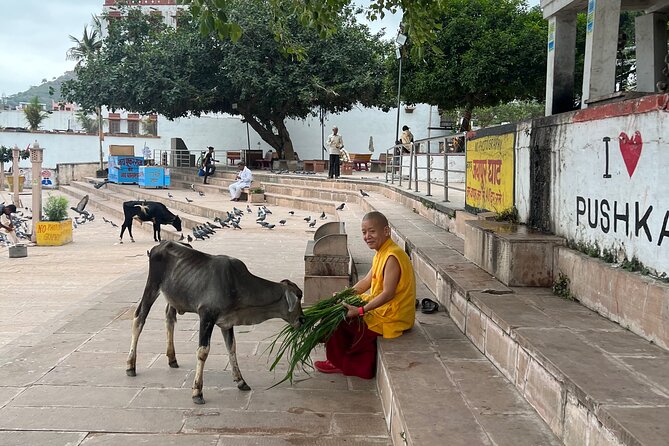
After the Brahma Temple, the route heads toward Pushkar Lake and Brahma Ghat. Families come to the ghats to pray and to pay tribute to deceased relatives. The guide can help you understand the customs and the place these waters hold in local spiritual life.
Allow about 30 minutes for the lake and Brahma Ghat. This is also one of the route’s most atmospheric stretches, and the ghat is noted as a photography spot. Be discreet with your camera: people may be praying or taking part in personal rites. Ask before photographing anyone close up, and take cues from your guide.
Gau Ghat is another listed stop. It is described as the oldest of Pushkar’s 52 ghats and is also known as Gandhi Ghat. Nearby Halwai Gali is known for sweet shops and confectioners, giving you a glimpse of the everyday food trade alongside the religious sites.
There is an important practical wrinkle: the route notes say not to go to Gau Ghat’s location, despite listing it as a stop. Ask your guide whether Gau Ghat is included in the version you booked and whether you will visit it directly or hear about it from nearby.
Chai, Malpua and the food question
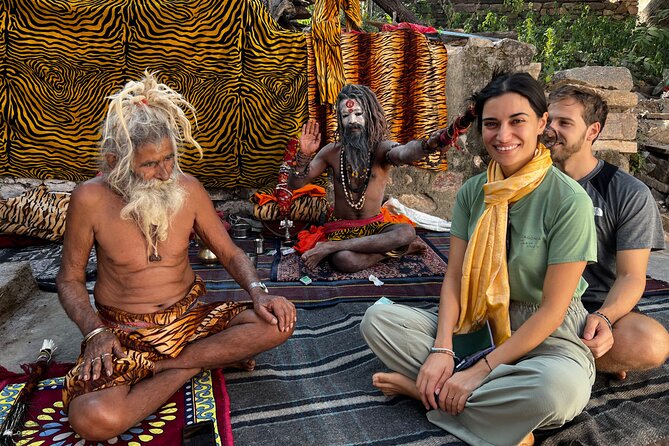
Tea and Malpua are included in the tour description. Masala tea is served in a clay cup and flavored with cardamom and ginger. Malpua is a traditional Pushkar sweet: a pancake made with curd, spices and khoya, coated in sugar syrup and topped with nuts.
The route also names a rooftop restaurant near Brahma Ghat, where a lemon, ginger and honey drink is served with a view of the market. These details do not line up perfectly with the general promise of masala chai and Malpua, so ask which refreshment applies to your specific tour. Do not plan on a full breakfast or lunch: food beyond the stated snack and drink is not included.
This distinction matters at such a low price. The included treat is a pleasant taste of local food, not a meal stop designed to replace breakfast or lunch. Eat beforehand if you need a proper meal, and budget separately for anything else you order.
What the price includes, and what to confirm
At $6.76 per person, the tour is inexpensive for a guided walk that includes guiding, taxes and fees, entrance fees, a drink and Malpua. Pickup and drop-off are offered, and lockers are available for cameras and large bags. Those details can make the outing easier if you are carrying bulky items or want a guide to handle the route.
The value depends on what you want. If you are comfortable wandering independently and only want to see the buildings, you may prefer to explore at your own pace. If you want someone to connect the sites to Hindu and Sikh traditions, explain local history and help you find temples you might otherwise miss, the price is compelling.
A past tour account describes a disagreement over the difference between morning and evening versions, where the walk ended, and which food and drink were included. That does not tell you what will happen on your visit, but it does make a quick confirmation worthwhile. Ask the provider which stops your chosen version includes, what refreshments are provided, and whether hotel drop-off is part of your plan.
Timing, group size and practical planning
The stated duration is approximately one to three hours. The individual stop times add up to around three hours, so allow enough time for the longer version. The tour is often booked about nine days ahead, a useful planning guide if you have fixed dates, though it does not guarantee availability.
The group has a maximum of six people, and most people can participate. Pickup is offered, and the experience is near public transportation. Wear comfortable walking shoes and bring water, especially if you are walking in warm weather. The tour requires good weather; if poor weather forces a cancellation, you can be offered another date or a full refund.
Free cancellation is available up to 24 hours before the start time. A cancellation made less than 24 hours ahead is not refundable, and changes within that period are not accepted. Times are based on Pushkar’s local time.
Who should book this Pushkar walk?
This tour makes the most sense for a first visit, especially if you want religious and historical context rather than a self-guided circuit of temples. It also suits curious visitors who want to ask questions, learn about more than one faith and see how worship continues around the lake and ghats.
It is a less natural fit if you are mainly looking for a food tour, a long architecture lecture or a guaranteed ceremony. Those elements are not promised across every version. Be clear about your priorities when you book, and confirm the route and included refreshments.
I would choose this walk if the chance to understand what you are seeing matters as much as the sights themselves. At a low price, a small group, a local guide and a carefully chosen route make a strong introduction to Pushkar, as long as you verify the version you are buying.
FAQ
How long does the tour take?
The approximate duration is one to three hours. The listed stops add up to about three hours, so allow extra time for the longer version.
How much does the tour cost?
The stated price is $6.76 per person. Prices can change, so check the amount shown for your dates.
What places does the walk visit?
The stated route includes Gurudwara Sahib, Varaha Temple, Old Rangji Temple, Atmateshwar Mahadev Mandir, Brahma Temple, Pushkar Lake, Brahma Ghat and Gau Ghat. Confirm which stops are included in your chosen version.
Who might lead the tour?
Guides named for this experience include Manish, Maneesh and Vishwanath. The guide assigned to your tour may vary.
Is food included?
Malpua and tea are listed as included. The route also refers to a lemon, ginger and honey drink at a rooftop restaurant, so confirm which refreshment is part of your version. Other food and drinks are not included.
Are entrance fees included?
The tour description says entrance fees are included. The itinerary also marks several stops as free admission.
Are holy rituals included in the price?
No. Charges for holy rituals and ceremonies chosen by participants are not included.
Is hotel pickup available?
Pickup and drop-off are offered. Confirm the meeting and end points with the provider, including whether drop-off at your hotel is included.
How many people can join?
The maximum group size is six people.
What happens if bad weather cancels the tour?
If the experience is canceled because of poor weather, you will be offered a different date or a full refund.
Just added around Jaipur
- Jaipur: Jhalana/Amagarh leopard safari private tour★ 3.8 · 21 reviews
- Jaipur: Private Evening Tour with Monkey Temple Sunset★ 4.6 · 27 reviews
- From Delhi : Taj Mahal full day Agra tour by Gatiman Train★ 5.0 · 23 reviews
- Jaipur Nahargarh Fort Sunset and Night City Tour★ 5.0 · 26 reviews
- Exclusive Safari at Jhalana Leopard Park Including Transfers★ 4.5 · 23 reviews
- From Delhi: Jaipur Private Same Day-Trip By Car or Train★ 4.9 · 15 reviews
- Jaipur sightseeing tour with monkey temple (Galta ji temple)★ 5.0 · 15 reviews
- Agra: Agra Fort and Baby Taj Private Tour with Pickup & Drop★ 4.9 · 29 reviews
Pushkar Tours, compared.

Afternoon Walk Tour with Sunset & Fire Ritual -The Pushkar Route
Read our review →
Spiritual Walking tour with Puja Ceremony -The Pushkar Route
Read our review →

Pushkar Day Trip from Jaipur – Private Car, Safari, Guide & Lunch
Read our review →
Browse the lists this tour appears in