

Review · PUSHKAR TOURS
Afternoon Walk Tour with Sunset & Fire Ritual -The Pushkar Route
Pushkar’s most memorable moment may come at the water’s edge: the sun lowering over the lake as music and an evening fire ceremony bring the ghats to life. This three-hour walk links that scene with temples and quieter lanes, so you get more than a sunset stop.
I like two things in particular: the guide connects the temples to Hindu and Sikh traditions, and the small group limit of six leaves room for questions and pauses. Hot drinks and snacks help keep the late-afternoon walk comfortable, too. One consideration: the route covers several religious sites in about three hours, so this is a brisk introduction, not a slow, in-depth visit to every temple.
What to know before you go
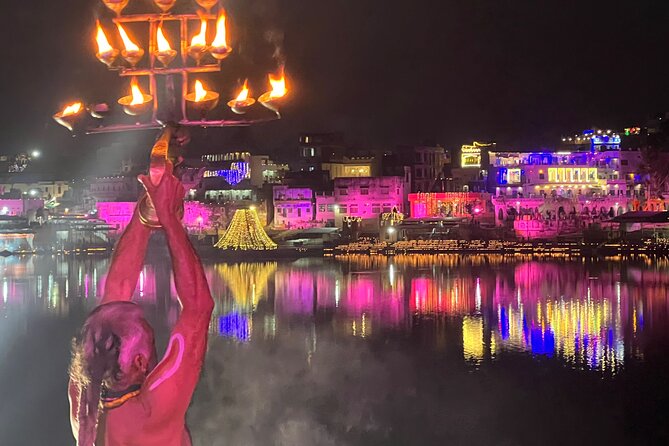
- The fire ceremony is the centerpiece: The tour includes an evening ritual at Brahma Ghat, with live music also part of the experience.
- You see several sides of Pushkar: The route takes in temples, lake ghats, a Gurudwara, market lanes, and local sites.
- Guides add cultural context: Manish is named by several participants, and Vishwanath is also mentioned as flexible about preferences and delays.
- The group is capped at six: A small party makes it easier to hear explanations and ask questions in narrow streets.
- The price is $7 per person: Included temple admissions, hot drinks, snacks, music, and a guided walk make that a strong value.
- Plan for a three-hour walk: The start time is 4 pm, and pickup is offered. Confirm the exact meeting or pickup details when arranging the tour.
Temples, lake ghats, and an evening ritual in one walk
Pushkar is compact, but its sacred sites can be hard to make sense of when you’re finding your own way through unfamiliar lanes. This guided route gives you a framework: a Vishnu temple, a Sikh shrine, the lake, a Shiva temple, Brahma’s temple, and the evening ceremony. You get movement, explanation, and time by the water in one afternoon.
The tour begins at 4 pm and lasts about three hours. That timing matters. You see the town in the softer light of late afternoon and reach the lake as sunset and evening worship become part of the experience. The schedule is full, however, so expect to keep moving between stops rather than linger at each one.
The group limit of six is a practical advantage. Pushkar’s narrow lanes and busy temple areas can make it difficult to stay together in a large party. With a smaller group, you can ask questions as they come up, and the guide can adapt more easily. One participant describes Vishwanath adjusting the route to suit preferences and a delayed start, though you should not assume every tour will follow a custom itinerary.
More Pushkar trips around Jaipur:
- Spiritual City Walking Tour-THE Pushkar Route
★ 5.0 · 907 reviews - Evening Walking Tour with Fire Rituals-The Pushkar Route
★ 4.9 · 108 reviews - Spiritual Walking tour with Puja Ceremony -The Pushkar Route
★ 5.0 · 101 reviews
Varaha Temple and Gurudwara Sahib
Varaha Temple is dedicated to Lord Vishnu and is described as one of Pushkar’s ancient temples. The itinerary identifies it with the Swayambhu Kshetras, a group of sacred places associated with Vishnu, and dates its construction to the 12th century. You have about 25 minutes here, with admission included.
That short visit is enough to begin understanding why Pushkar is more than a lake town. A guide can explain the temple’s place in local religious life and help you notice details you might otherwise pass by. If you want a lengthy architectural study, though, this stop is only an introduction.
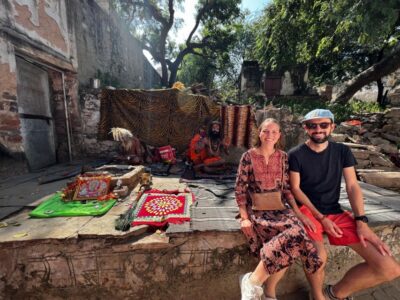
Next is Gurudwara Sahib, where the guide explains Sikh history and why Pushkar is sacred to Sikhs as well as Hindus. The visit lasts about 20 minutes and has no admission charge. It broadens the tour’s perspective: the town’s spiritual identity is not limited to one faith or one kind of worship.
This is a useful stop for anyone who wants more than a checklist of famous Hindu temples. The quality of the explanation matters here, and the route’s guides are praised for making religious ideas understandable to people who are new to them. You can ask questions, but keep in mind that the tour moves on after a short visit.
Pushkar Lake at sunset
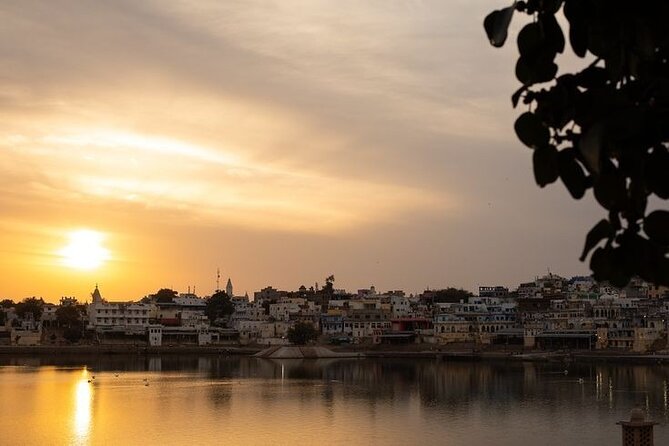
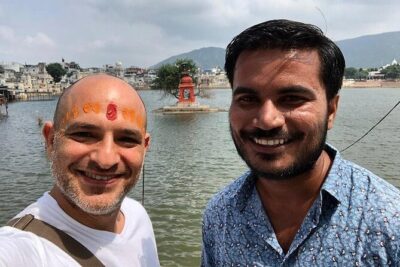
The walk then reaches Pushkar Lake, where the ghats frame views across the water. The stop is listed as 20 minutes, and the ghat described on the route is also called Sunset Point or Raj Ghat. It was built under Raja Man Singh I in the early 16th century and later renovated by Jai Singh in the 18th century.
This is where the tour’s timing pays off. You can sit by the ghat, take in the changing light, and listen to music before the evening ritual. One of the most warmly described parts of the experience is simply watching the sunset with music at the water’s edge. That pause gives the afternoon a different rhythm from the temple visits.
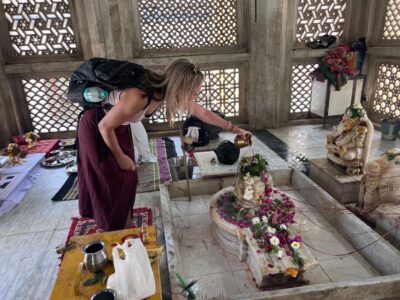
The lake is also a place for prayer and personal observance. Some people choose to receive a blessing or make an offering; participation is optional. If you prefer to watch quietly, you can do that. I would follow the guide’s lead about where to stand and how to behave, and ask before taking photographs around worshippers.
Hot drinks and snacks are provided during the tour, which is a welcome touch on a walk with several stops. The information does not specify exactly when they are served, so treat them as a useful refreshment rather than a guaranteed stop at a particular point.
Brahma Ghat and the fire ceremony
At Brahma Ghat, the tour includes an evening Aarti, or fire ceremony. The planned visit is about 30 minutes, and admission is included. This is the heart of the experience: the ritual brings together the lake, music, flame, and prayer in a setting that gives the town’s spiritual life a visible, communal focus.
You do not need to know the ritual’s details in advance to appreciate the moment. A guide can explain what is happening and why the ceremony matters, making it easier to follow without feeling like an outsider. The tour is presented as an opportunity to experience the ceremony, while participation in personal blessings or offerings is not compulsory.
The emotional effect may be the strongest reason to book. People describe the fire ceremony as memorable and moving, and the music at the ghats as a highlight. Still, this is a religious observance, not a staged show. Be ready to watch respectfully, and let the guide clarify what is appropriate if you are unsure.
More walking tours around Jaipur:
- Jaipur Bazaar & Food Walking Tour
★ 5.0 · 281 reviews - Heritage Walk & Street Food Tasting in Jaipur
★ 5.0 · 158 reviews - Magical Walk of Jaipur
★ 5.0 · 121 reviews - Cultural Walk and Food Tasting In Jaipur
★ 5.0 · 118 reviews
Atmateshwar Mahadev Mandir and the ghats
The route also visits Atmateshwar Mahadev Mandir, a Shiva temple described as an underground cave temple dating to the 12th century. Its carved architecture is a point of interest, and the stop lasts around 15 minutes, with admission included.
A short visit is enough to introduce a markedly different kind of temple space from the lakefront ghats. The underground setting and detailed carvings give the route some variety after the open views by the water. If enclosed or uneven spaces are a concern for you, ask the tour operator for more information before booking; no specific accessibility details are provided.
The walk continues along the ghats toward Brahma Ghat, with about 20 minutes set aside for this part of the route. The itinerary notes opportunities for family offerings and prayers for ancestors. These are personal practices, not something you have to join. You can observe, listen to the guide, or simply take in the lake and the role these steps play in daily worship.
Brahma Temple and the old Rangji Temple
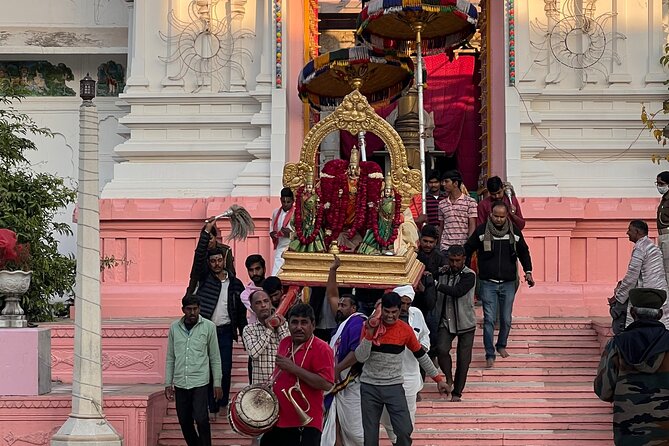
Brahma Temple is one of Pushkar’s best-known religious landmarks. The route describes it as the only temple in the universe dedicated to Lord Brahma, with a structure dating to the 14th century and later renovations. Its black and white marble and carved pillars are among the details to look for. The visit lasts about 30 minutes, and admission is included.
The temple’s fame can make it feel like a must-see box to tick, but the guide’s explanation is what gives the stop context. You can learn why Brahma has such a singular place in Pushkar and how the temple fits into the town’s sacred geography. The visit is still brief, so focus on listening and taking in the interior rather than expecting a long, unhurried exploration.
The route also includes the old Rangji Temple, described as a roughly 200-year-old temple dedicated to Vishnu near Varaha Ghat. It appears as an additional stop without a stated visit duration, so the time available there may depend on the pace of the tour. Its inclusion is a bonus for anyone interested in comparing Pushkar’s different temple traditions and styles.
Market lanes and Halwai Gali
After Brahma Temple, the walk heads through Pushkar Main Market and narrow lanes toward Halwai Gali and Gandhi Ghat. The market portion is scheduled for about 20 minutes. It offers a change of pace after the temples: a chance to see everyday street life and notice the small details that make walking with a local guide useful.
Halwai Gali is known for malpuas, a sweet associated with the area. The itinerary does not promise a tasting, so think of this as a place to see and perhaps explore, rather than a food tour. The guide can help you orient yourself among the lanes and point out photography spots along the way.
The market can be busy, and the group will need to keep moving to complete the route. If shopping is a priority, you may want to return on your own after the tour. The walk offers an introduction to the area, not an extended browsing session.
Is $7 good value?
At $7 per person, this tour offers a lot for the price. You get roughly three hours with a guide, entry to Varaha Temple, Atmateshwar Mahadev Mandir, and Brahma Temple, plus the included fire ceremony, hot drinks, and snacks. The route also covers several free sites and public spaces, including Gurudwara Sahib, the lake, and the market lanes.
The strongest value is not simply the number of stops. It is the cultural explanation connecting them. Without a guide, you could walk past the temples and ghats without knowing why they matter or how the rituals fit together. Here, the guide turns a sequence of places into an account of Pushkar’s religious life. Names associated with the tour include Manish and Vishwanath, though you should not count on a particular guide unless that is confirmed.
There are trade-offs. The schedule is packed, and a few stops receive only 15 to 20 minutes. If you want to spend an hour inside a temple, shop at length, or sit through every part of the evening worship, you may prefer to explore independently or add more time in town. For a first visit, the range of sites and the sunset-to-ceremony timing make the low price compelling.
Pickup is offered, but the precise arrangements are not stated here. The tour starts at 4 pm, and confirmation is provided at booking. Free cancellation is available up to 24 hours before the start time; cancellations or changes made later are not accepted for a refund.
Who should book the Pushkar Route?
I’d choose this walk if you have only one afternoon in Pushkar and want a guide to make the temples and rituals easier to understand. It also suits curious first-time visitors, people interested in Hindu and Sikh traditions, and anyone who values a small group and a sunset stop more than a leisurely temple-by-temple visit.
It may be less suitable if you want a quiet, private experience, need a very slow pace, or plan to spend extended time shopping and taking photographs. The route covers many sites in three hours, and the ceremony is a religious event, not entertainment arranged solely for the group.
For most people looking for an affordable, compact introduction to Pushkar, I’d book it. You get the town’s major spiritual landmarks, a local guide, and an evening by the lake, with enough flexibility in the small group to ask questions along the way.
FAQ
How long is the tour?
It lasts approximately three hours.
What time does the tour start?
The stated start time is 4 pm.
How many people can join?
The group is limited to a maximum of six people.
Which temple admissions are included?
Admission is included at Varaha Temple, Atmateshwar Mahadev Mandir, and Brahma Temple.
Are hot drinks and snacks provided?
Yes. Hot drinks and snacks are included, though a specific serving time is not stated.
Can I cancel for a refund?
You can cancel up to 24 hours before the experience starts for a full refund. Cancellations and changes made less than 24 hours before the start time are not accepted.
More evening experiences around Jaipur
- Taj Mahal Sunrise & Sunset All Inclusive Private Luxury Agra Tour
★ 5.0 · 348 reviews - Experience Jaipur By Night
★ 5.0 · 215 reviews - Full-Day Jaipur Tour Ending with a Sunset Experience
★ 5.0 · 128 reviews - Jaipur Tuk Tuk Sightseeing Tour with Monkey Temple Sunset View
★ 5.0 · 108 reviews
Just added around Jaipur
- From Delhi: Jaipur Private Same Day-Trip By Car or Train★ 4.9 · 15 reviews
- Jaipur sightseeing tour with monkey temple (Galta ji temple)★ 5.0 · 15 reviews
- Jaipur: Jhalana/Amagarh leopard safari private tour★ 3.8 · 21 reviews
- Jaipur: Private Evening Tour with Monkey Temple Sunset★ 4.6 · 27 reviews
- From Delhi : Taj Mahal full day Agra tour by Gatiman Train★ 5.0 · 23 reviews
- Jaipur Nahargarh Fort Sunset and Night City Tour★ 5.0 · 26 reviews
- Exclusive Safari at Jhalana Leopard Park Including Transfers★ 4.5 · 23 reviews
- Private Full Day Jaipur Sightseeing Tour By Tuk-Tuk (Rickshaw)★ 5.0 · 30 reviews
Pushkar Tours, compared.
Spiritual Walking tour with Puja Ceremony -The Pushkar Route
Read our review →

Pushkar Day Trip from Jaipur – Private Car, Safari, Guide & Lunch
Read our review →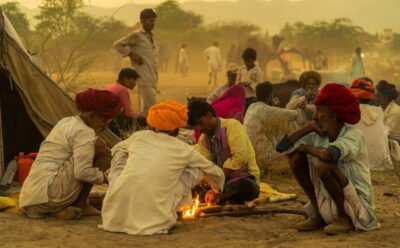
Browse the lists this tour appears in