
Review · JAIPUR WALKING TOURS
Taj Mahal Handicraft Walk: Explore True India with Artisans
Near the Taj Mahal, some of Agra’s most revealing details are not carved into its white marble. They are made by hand in nearby workshops and homes, where this two-hour walk introduces you to gold embroidery, marble inlay, flower ornaments and carpetmaking.
I like that you meet craftspeople in the places where they work, rather than only seeing finished goods in a showroom. I also like the clear links between the crafts and the Taj Mahal, especially the marble-inlay workshop run by descendants of the artisans who worked on the monument.
One thing to weigh: this is an introduction, not an in-depth craft course. You visit several places in a short time, and the tour is focused on handicrafts rather than a visit inside the Taj Mahal. Keep your expectations, and your shopping budget, in check.
The walk at a glance
- Four kinds of craft, one short walk: See zardozi embroidery, marble inlay, flower garlands and ornaments, and carpetmaking.
- A family link to the Taj: At the marble-inlay workshop, artisans are descendants of craftspeople who made the Taj Mahal.
- A look into local homes: Entry to artisans’ homes is included, giving the walk a more personal setting than a shop-only visit.
- A private experience: Only your group takes part, so the guide can focus on your party.
- Flexible start options: Several tour times are offered, with optional pickup by private car or tuk tuk.
- A modest price, with transport separate: The listed price is $15.88 per person; private transportation is not included.
Agra’s craft traditions, beyond the Taj Mahal gates

The Taj Mahal draws your eye to the finished monument. This walk turns your attention to the work and traditions behind some of the crafts associated with Agra. You are not touring the Taj itself. Instead, you visit workshops and homes in the surrounding area, where artisans still make objects by hand.
That difference matters. A monument can leave you admiring its surface without knowing how its decorative arts are made. Here, the guide connects the craft demonstrations and conversations to local history, so you can see how these skills continue in the city today.
The route also offers a change of pace from the main Taj-area sights. You walk through 17th-century lanes and meet people at work, with time for photos and a taste of everyday life. The supplied details do not promise a specific amount of walking or time at each stop, so treat the two-hour duration as a compact overview rather than a long workshop visit.
The tour is run by Agra Heritage Walks and is private for your group. That means you are not sharing the experience with a larger tour party, though the details do not specify how much time is spent at each artisan’s home or workshop.
More Taj Mahal tours around Agra:
- Agra: Skip-the-Line Taj Mahal & Agra Fort Private Tour
★ 4.9 · 1,546 reviews - Agra: Taj Mahal Express Entry Tickets
★ 4.8 · 684 reviews - Agra: Taj Mahal and Mausoleum Guided Tour with Skip-the-Line
★ 4.8 · 631 reviews
Zardozi: gold embroidery by hand
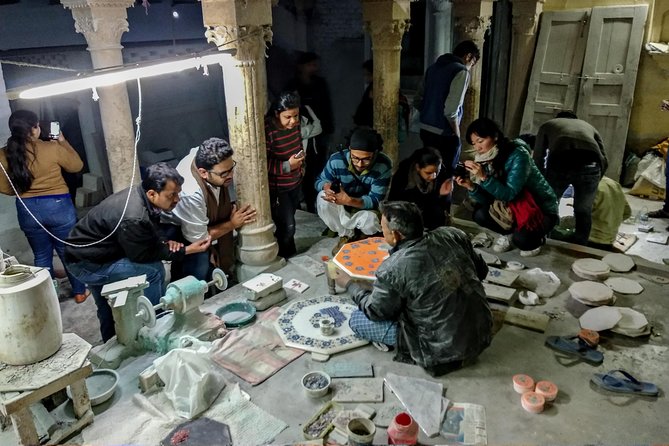
The first stop is one of the oldest zardozi workshops around the Taj Mahal. Zardozi is gold embroidery, and the visit introduces you to the craft’s history and the fine work involved in making it.
This is a useful first stop because it gives you a close look at a skill that can be easy to miss when you are browsing finished pieces. You can see the craft in its working setting and hear how it is practiced, rather than simply being told that an embroidered item is handmade.
The description promises a brief explanation of the history and intricacies, not a lesson in stitching or a chance to try the technique yourself. If you are keen on craft, bring questions. The walk visits several art forms, so each stop is best approached as a focused introduction.
Marble inlay and the Taj Mahal connection
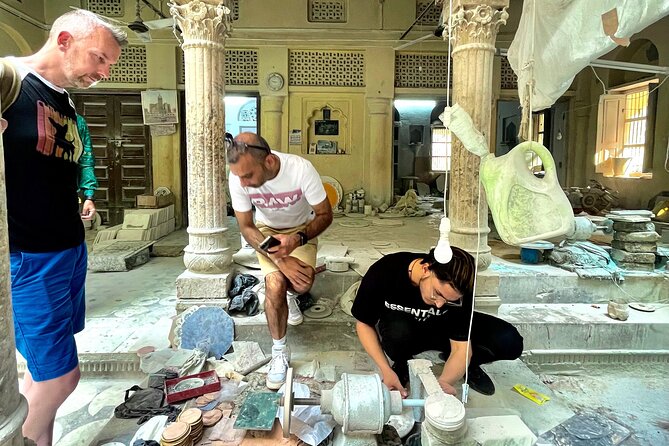
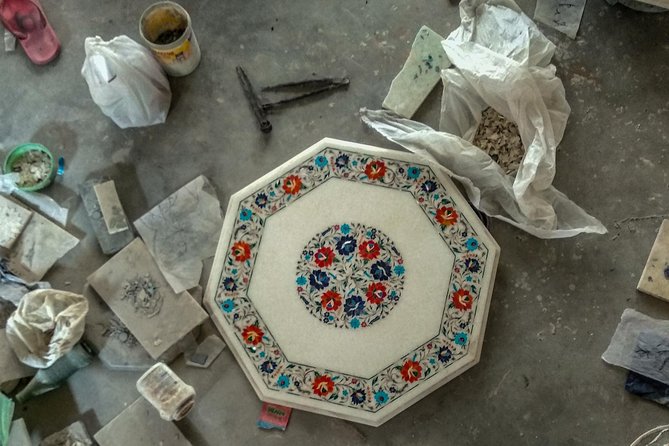
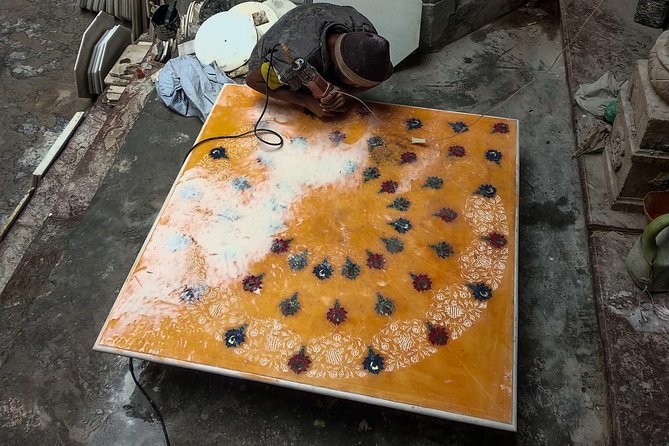
At a marble-inlay workshop, the guide explains how the craft began alongside the building of the Taj Mahal and how it developed afterward. The artisans here are descendants of the craftspeople who made the monument, a connection that gives this stop particular relevance.
The work is also known as Pietra Dura. Seeing it in a workshop helps put the decorative art into context: the Taj is not only a famous building, but part of a longer local tradition of skilled making. You can learn about the craft and its connection to the monument without confusing this walk with a Taj Mahal entry ticket.
The tour also visits a three-generation-old workshop for marble Prachinkari work. The guide explains how this art relates to Pietra Dura. Those two stops give you a chance to compare connected forms of marble work, although the available details do not specify the exact objects made or whether demonstrations are guaranteed.
If your interest in the Taj Mahal extends beyond its architecture, these workshops may be the strongest part of the walk. The family connection is specific and meaningful, but it should not be mistaken for a formal genealogy lesson or an extended technical class.
Flower garlands in the old lanes
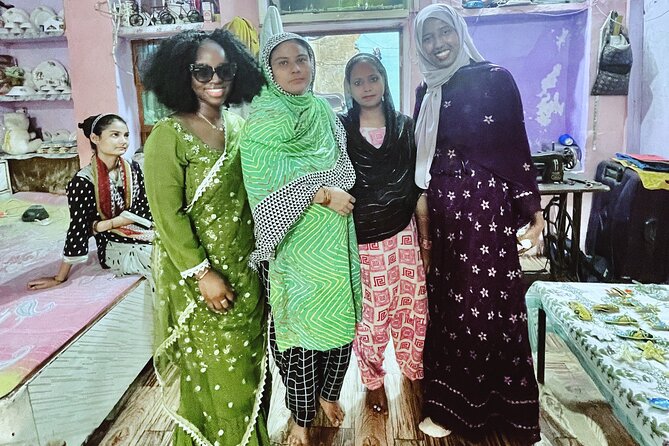
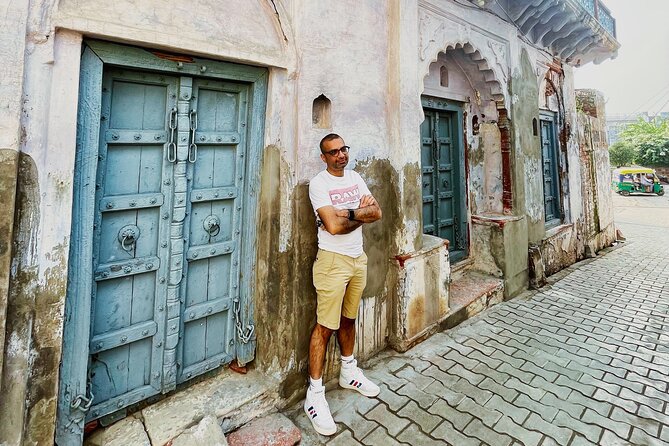
The walk continues through 17th-century lanes to households where people make garlands and other body jewelry from fresh flowers. This stop shifts the focus from long-standing workshop crafts to work shaped by the use of fresh materials.
You learn how the role of fresh flowers has changed over time and how those changes have affected the industry. That makes the visit more than a quick photo stop: it connects a familiar material to the livelihoods and daily work of local makers.
The information does not say which flowers you will see or whether you can make an item yourself. Go ready to observe and listen. The appeal here is the chance to see a household craft in its working environment, not a staged activity with a promised hands-on component.
More walking tours around Agra:
- Agra Walking Tour
★ 5.0 · 109 reviews - Agra: Street Food Walking Tour, Spice Market, & Tuk-tuk Ride
★ 4.9 · 102 reviews - Agra 101 City Walk
★ 5.0 · 41 reviews - Flavours of Agra Food walk
★ 5.0 · 25 reviews
Carpetmaking at home
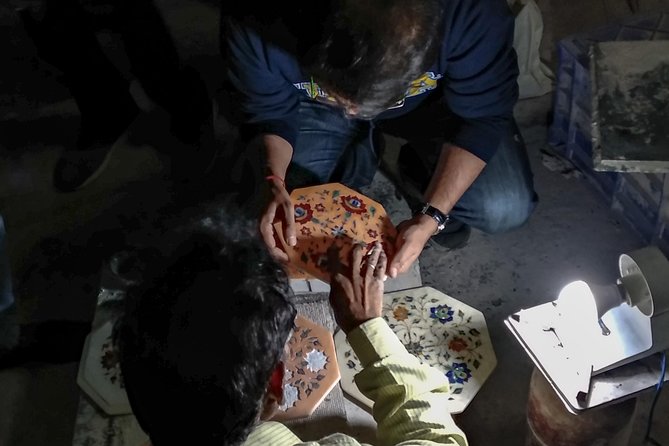
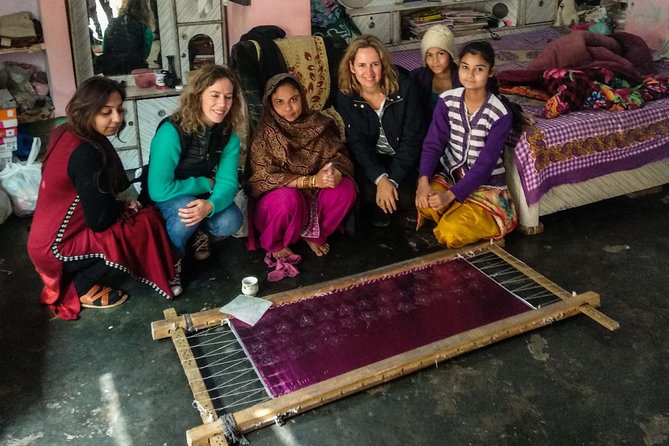
Carpetmaking is the final craft described on the route. You visit a household where the guide explains how present-day designs have evolved through cross-community acculturation.
That phrase points to exchange between communities as one influence on the designs. It offers a useful reminder that local craft traditions are not fixed in time. Patterns can change as ideas and styles meet, even when the work remains rooted in household production.
The tour details do not specify the carpet designs, materials, size of the household operation or whether carpets are available to buy. If you are curious about how a design is made or changed, ask the guide. The visit is an opportunity to learn about the craft and its evolution, not a guarantee of a detailed weaving demonstration.
Buying souvenirs without losing sight of the purpose
The walk is presented as a good chance to buy souvenirs at a better price than in stores. That may appeal if you are looking for handmade work, but treat the shopping opportunity as an option, not the central reason to book. The strongest draw is the chance to meet artisans and learn where the crafts come from.
If you are considering a purchase, take time to look closely and ask what the item is made of and how it was produced. The tour information does not list set prices, bargaining guidance or a requirement to buy. You should feel free to enjoy the visits without assuming that you must take something home.
The $15.88 per-person price is modest for a private, two-hour guided walk that includes entry to artisans’ homes. It is especially good value if you want context and local contact, rather than a standalone shopping trip. But private transportation is not included in the stated inclusions, so factor in your own journey to the meeting point unless you arrange one of the pickup options.
Timing, pickup and what to expect
The meeting point is The Orchid Retreat, Plot No. 28, Taj Nagri Phase 1, Taj East Gate Road, Shilpgram Road, Agra. The activity ends back at the same place. Several tour times are available throughout the day, which makes it easier to fit the walk around other plans, though exact departure times should be checked when booking.
Pickup is offered as an option by private car or tuk tuk, or you can choose the tour without pickup. Since private transportation is not included, confirm the terms and any extra cost for pickup before you commit. The listed price alone does not establish that a ride is part of the fare.
The tour lasts about two hours. That is enough for a sampling of several crafts, but not much time for lingering at every stop. If you want a slow, highly technical look at one art form, a focused workshop visit may suit you better. If you want a compact introduction to several traditions near the Taj, this format makes sense.
The activity is private, with only your group participating. Confirmation is provided at booking, and the tour is near public transportation. The details say most people can participate, but do not give a specific accessibility description, so ask the operator if you have particular mobility needs.
The tour requires good weather and a minimum number of travelers. If poor weather or an unmet minimum leads to cancellation, you are offered another date or a full refund. You can cancel for a full refund up to 24 hours before the start time; changes or cancellations inside that window are not accepted.
Who should book this walk
I would put this tour high on the list for anyone who wants more than photographs of the Taj Mahal. It suits curious visitors who enjoy seeing how things are made, want a human-scale look at Agra, or would like to understand the craft traditions linked to the monument.
It is also a practical choice if you have about two hours free and prefer a private walk to a group excursion. The several start times and optional pickup add flexibility, while the reasonable price keeps it accessible for travelers who want a guided experience without committing to a full-day tour.
It may be less suitable if you want a hands-on class, a long visit with one artisan, or guaranteed shopping at a particular price. The walk offers introductions across several crafts, and the precise time and activity at each stop are not specified. Book it for the conversations, setting and range of work, and regard purchases as a bonus.
The tour has a 4.9 rating from 16 reviews, with 100 percent recommending it. One especially useful tip is to schedule it after your Taj Mahal visit: seeing the monument first can give the marble-inlay and embroidery stops a sharper context. A guest praised the clear, friendly contact with guide Arhaan after booking, noted that he was on time, and appreciated extra stops with interesting information. Extra stops are not guaranteed, but clear communication and punctuality are sensible things to confirm.
Should you book it?
Book the Taj Mahal Handicraft Walk if you want to meet artisans and connect Agra’s working crafts with the Taj Mahal’s story. The family link at the marble-inlay workshop, the old-lane flower households and the private format make this more than a walk past souvenir shops.
Skip it if you need an extended craft lesson or have no interest in handicrafts. For most visitors with a free two-hour window, it is an affordable way to see another side of Agra. If possible, place it after your Taj visit, when the craft connections are easier to appreciate.
FAQ
How long is the Taj Mahal Handicraft Walk?
The walk lasts approximately two hours.
How much does the tour cost?
The listed price is $15.88 per person.
Is the tour private?
Yes. Only your group participates.
Where does the tour start and end?
It starts and ends at The Orchid Retreat in Taj Nagri Phase 1, Agra.
Is pickup included?
Pickup is offered as an option by private car or tuk tuk, or you can choose the tour only. Private transportation is not included in the stated inclusions, so confirm pickup arrangements when booking.
Which crafts are included?
The walk visits a zardozi gold-embroidery workshop, marble-inlay and marble Prachinkari workshops, households making fresh-flower garlands and body jewelry, and a carpetmaking household.
Are artisan home visits included?
Yes. Entry to artisans’ homes is included.
Can I cancel for a full refund?
Yes, if you cancel at least 24 hours before the experience’s start time.
Just added around Agra
- Approved Tour Guide in Agra for Full Day Sightseeing★ 5.0 · 9 reviews
- National Chambal Sanctuary and Alligator Day Tour from Agra★ 5.0 · 5 reviews
- Old Agra City Short Cultural Walk★ 5.0 · 7 reviews
- Stepwell & Fatehpur Sikri stops Agra to/from Sawai madhopur city★ 5.0 · 3 reviews
- LOCAL Agra :Taj Mahal Sunrise / Sunset Private Tour by Car★ 5.0 · 6 reviews
- Agra Full-day Tour Taj Mahal, Agra Fort & Secret Walking Tour with Private Car★ 5.0 · 17 reviews
- Agra: Skip the Line Taj Mahal and Agra Fort Private Day Tour★ 5.0 · 6 reviews
- Private Keoladeo National Park Tour sightseeing – All Inclusive★ 5.0 · 13 reviews
Jaipur Walking Tours, compared.




Afternoon Walk Tour with Sunset & Fire Ritual -The Pushkar Route
Read our review →
Browse the lists this tour appears in