
Review · PUSHKAR TOURS
Full Day Spiritual Tour of Ajmer & Pushkar-The Pushkar Route
Ajmer and Pushkar offer strikingly different ways to encounter faith in Rajasthan. In Ajmer, you enter the close-knit streets around a revered Sufi shrine; in Pushkar, temples and lake ghats set a slower rhythm. This private tour puts both cities into one day, with a guide to connect the places rather than leave you to decode them alone.
I like two things in particular: the mix of Jain, Muslim, Sikh and Hindu sites, and the chance to hear explanations shaped around your interests. One past account describes a conversational guide and a lunch break with a view. The main consideration is the packed timetable: the listed stop times add up to six hours before the stated lunch break, so confirm how the actual day is paced.
- Four Ajmer stops cover a Jain temple complex, a Sufi shrine, Akbar’s Palace and Ana Sagar Lake.
- Six named Pushkar stops include temples, the lake and a Sikh gurdwara, with evening aarti described as the finale.
- The tour is private, so only your group participates and you can ask questions along the way.
- A one-hour lunch break is planned, though the price and exact arrangements for lunch are not specified.
- The tour costs $50 per person, with pickup offered and a mobile ticket.
Two cities, two distinct spiritual settings
The appeal here is contrast. Ajmer’s lanes and major religious sites feel quite different from Pushkar’s temple-and-ghat circuit, and visiting both gives you a broader view of the region’s living traditions than a single-city outing could. You are not simply ticking off monuments: the guide’s explanations can help make sense of why places sacred to different communities sit within the same short journey.
The day is sold as an approximately six-hour private tour, starting at 10:00 am. The planned order begins in Ajmer, pauses for lunch, then continues in Pushkar and ends with evening aarti at Pushkar Lake. Since the itinerary assigns individual durations totaling six hours before lunch, that published timing deserves a quick check before you book. Ask the operator how driving, lunch and the aarti fit into the day, and whether the six-hour estimate is likely to stretch.
There are ten named stops in the detailed schedule, while the tour description says it covers eleven major points. Evening aarti may be the additional experience, but the count is not made explicit. This does not change the broad appeal, but it is worth clarifying if you are planning around a firm return time.
Ajmer’s Jain craftsmanship and Sufi devotion
The first Ajmer stop combines Soni Ji Ki Nasiyan, Soni Ji Ki Haveli and Soni Temple in a 45-minute visit. The Jain temple is dedicated to Rishabhdev, the first of the Tirthankaras, and is described as a 19th-century building with more than 1,000 kilograms of gold used in its decoration. That detail gives you a sense of the site’s ambition, though the available information does not say how much of the complex or its interiors you will see during the allotted time.
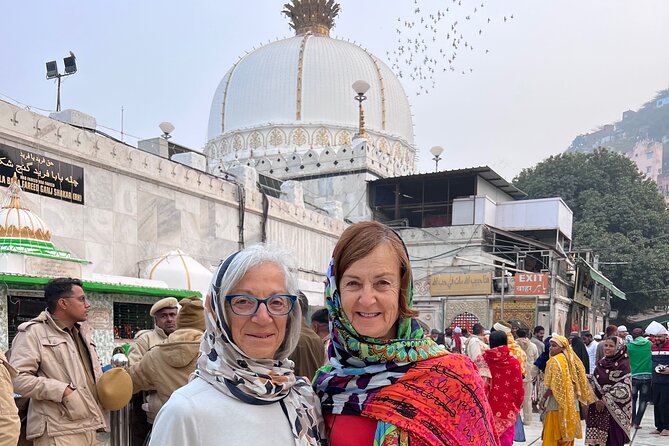
The next 45 minutes are set aside for Dargah Khwaja Kanoon Sahib, identified in the tour description with Ajmer Sharif and the tomb of the Sufi saint Khwaja Moinuddin Chishti. This is a major place of Muslim devotion, and its religious importance is central to understanding Ajmer. The narrow lanes around the dargah are part of the experience, but they can also make the visit feel busy and close-quartered. Dress and behave respectfully at religious sites, and follow your guide’s instructions about what is appropriate inside.
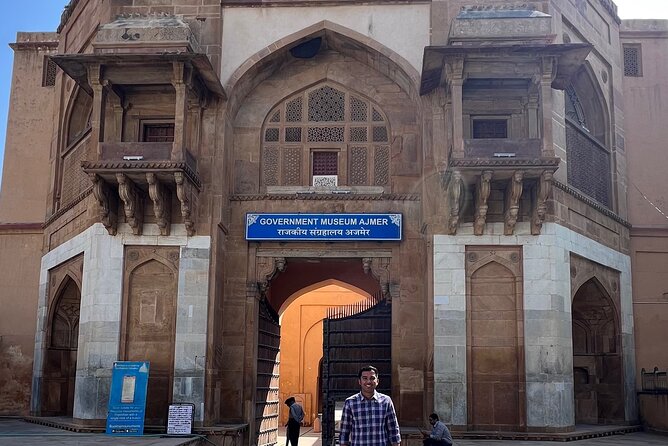
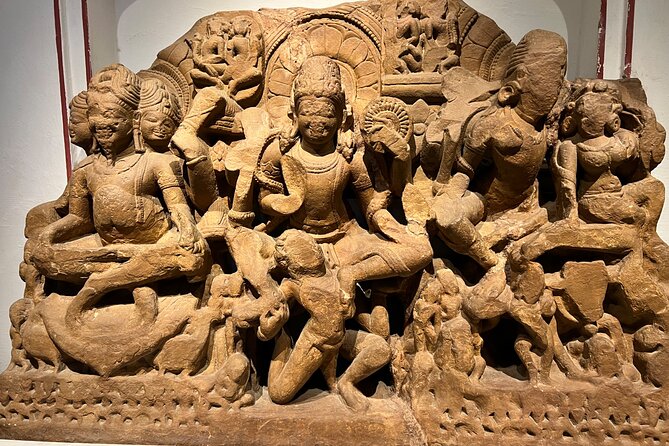
At Akbar’s Palace and Museum, the route turns to the city’s political and material past. The museum occupies the old 16th-century Akbari Fort and contains historical objects, sculptures and miniature paintings. Its 45-minute slot is enough to introduce the collection, not to examine every display at length. If a particular period or object catches your eye, use the private format to ask the guide for context rather than trying to absorb the entire museum at speed.
The Ajmer portion finishes at Ana Sagar Lake, with 30 minutes to take in the water and the gardens beside it. The lake was built by King Arnoraja, also called Anaji Chauhan, and later rulers added features around its edge. Jahangir built Daulat Bagh, while Shah Jahan added marble pavilions. This stop offers a change of pace after the shrine and museum, though half an hour is a brief pause rather than a long lakeside visit.
More Pushkar trips around Pushkar:
- Spiritual City Walking Tour-THE Pushkar Route
★ 5.0 · 907 reviews - Afternoon Walk Tour with Sunset & Fire Ritual -The Pushkar Route
★ 5.0 · 119 reviews - Evening Walking Tour with Fire Rituals-The Pushkar Route
★ 4.9 · 108 reviews
Lunch between the city visits
The plan allows one hour for lunch between Ajmer and Pushkar. A past account describes lunch with a view as a welcome respite, a useful point in a day otherwise built around tightly timed visits. Still, the tour details do not clearly state whether lunch is included in the $50 price, where it takes place or whether you choose the meal yourself. Confirm those details before departure, especially if you have dietary needs or want to budget accurately.
The break matters beyond the food. A full day of religious visits can become a blur if every stop runs straight into the next. An hour to sit down gives you time to ask your guide about the places you have seen and reset before the Pushkar leg. If the schedule runs late, lunch may also be one of the first places where the day’s pace becomes noticeable, so ask how the operator handles delays.
Pushkar’s temples, from Sikh history to Brahma
Pushkar begins at Gurudwara Sahib, where the guide introduces Sikh religion and community. The site is connected with two of the ten Sikh Gurus, though the tour information does not identify them by name. This is a helpful opening to the city’s religious mix, especially if most of your expectations for Pushkar center on Hindu temples and the lake.
Varaha Temple follows. Dedicated to Vishnu in his boar form, Varaha, it is described as one of Pushkar’s ancient temples and one of Vishnu’s eight Swayambhu Kshetras. Its origins are linked to a 12th-century ruler, Anaji Chauhan. The 30-minute visit offers a concentrated look at a temple with an important place in the local sacred geography.
The Old Rangji Temple is also allotted 30 minutes. Located near Varaha Ghat, it is dedicated to Vishnu and is described as about 200 years old. Its age and setting make it a useful stop for seeing how Pushkar’s temple life sits close to the ghats and the town’s lanes. The short visit is best treated as an introduction, not a long period for quiet exploration.
At Atamteshwar Mahadev Mandir, the focus shifts to Shiva. This underground cave temple is described as a 12th-century structure, with Hemadpanti carvings as a notable feature. The 30-minute allocation may suit a focused visit, but if enclosed or underground spaces are not your preference, ask your guide what the access involves before you go. No access details are provided in the tour information.
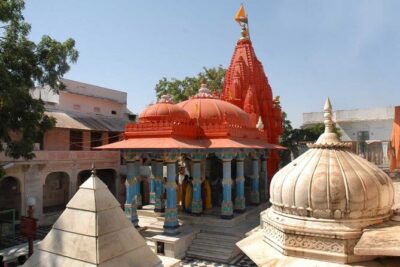
Brahma Temple is the most distinctive stop in the Pushkar sequence. It is dedicated to Brahma, a deity with very few temples dedicated to him, and the building dates in part to the 14th century, with later renovation. Black and white marble form much of the temple, according to the tour description. You have 30 minutes here, so listen for the guide’s explanation of the temple’s significance and notice the details that are easiest to miss when you are moving on a schedule.
Pushkar Lake and evening aarti
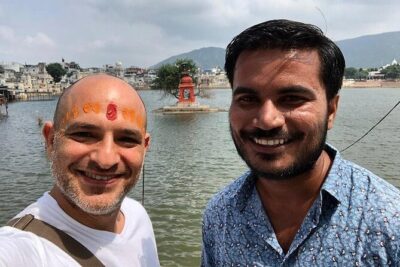
The final named stop is Pushkar Lake, surrounded by 52 ghats. These are not simply steps down to the water: each has cultural and religious meaning and may be used for bathing, ceremonies or meditation. Their construction is associated with rulers and emperors from across India. A 45-minute visit gives you time to see part of the lake’s edge and understand why it is central to Pushkar’s spiritual life.
The tour description says the day finishes by watching evening aarti at the lake. This can be a fitting close after a series of visits focused on faith and ritual, but the precise timing is important. The tour starts at 10:00 am and is described as about six hours, while evening aarti suggests a later finish. Ask the operator to confirm the expected end time and how much time you will have at the lake before the ceremony.
The aarti is the day’s clearest chance to pause and observe rather than move from one landmark to the next. Follow your guide’s lead on where to stand and how to behave, and remember that this is a living religious ceremony, not a performance arranged for the tour.
More full-day trips around Pushkar:
- Full-Day Ajmer and Pushkar Guided Sightseeing Private Trip
★ 4.5 · 6 reviews - Jaipur: Private Full Day Sightseeing Tour By Car with Guide
★ 4.9 · 1,839 reviews - Jaipur: Private Full-Day Sightseeing Tour by Tuk-Tuk
★ 4.8 · 573 reviews - Jaipur: Full-Day City Tour with Car, Guide & Skip-the-Line
★ 4.8 · 512 reviews
What the private format and $50 price mean
At $50 per person, the value depends on how much the private setup helps you get from a busy day. You are paying for a route through two cities, a guide and the convenience of seeing several religious and historic sites without planning each transition yourself. The tour’s strongest reported quality is the guide’s conversational approach: explanations can be adjusted to your interests and what you already know. That is particularly useful here, where Jain, Sufi, Sikh and Hindu traditions appear within a single itinerary.
The tour is private, meaning only your group participates. That gives you more room to ask questions than you might have in a large group, though it does not by itself guarantee extra time at each stop. Pickup is offered, but the details of pickup location and transport are not specified. Admission is explicitly included at the first stop, Soni Ji Ki Nasiyan; the information does not clearly state whether admission costs apply at other sites or are included.
The price looks most worthwhile if you value guided context and want to combine Ajmer and Pushkar in a single outing. It is less suited to someone who wants long, unhurried visits at each temple or museum. The day has many stops, and the stated timing leaves little margin unless the actual schedule differs from the listed stop durations.
Who should book this day trip
I would consider this tour if you have limited time and want a guided introduction to both Ajmer and Pushkar, especially if religious history interests you. The range of sites is its strength: a Jain temple, Sufi shrine, Sikh gurdwara, Hindu temples, a museum, a lake and aarti create a varied day rather than a single-theme visit.
It is also a good fit if you prefer a private outing and want to shape the conversation around your own questions. You may get more from the day by telling the guide what interests you most, whether that is architecture, religious practice or local history. The tour is less ideal if you prefer to set your own pace, spend hours in one place or need a firmly defined end time.
Confirmation is provided at booking, the ticket is mobile, and free cancellation is available up to 24 hours before the experience begins. Cancellations made within 24 hours are not refunded, and poor weather may lead to a different date or a full refund. These terms make early confirmation sensible, but the more important practical step is to verify the schedule, lunch arrangements and pickup details.
Should you book The Pushkar Route?
Book it if you want a compact, guide-led introduction to Ajmer and Pushkar, and you are comfortable with a full schedule. The private format and the mix of sacred sites make the $50 price appealing, particularly if a conversational guide helps you connect what you see. Before paying, confirm how the six-hour estimate works alongside lunch and evening aarti, and ask which admissions and meal costs are included. If you want more time at fewer places, plan separate visits instead.
FAQ
How long is the tour?
It is described as approximately six hours. The listed durations for the ten named stops add up to six hours before the separate lunch break, so confirm the expected total duration with the operator.
What time does the tour start?
The stated start time is 10:00 am.
How much does the tour cost?
The listed price is $50 per person.
Is this a private tour?
Yes. Only your group participates.
Is pickup available?
Pickup is offered. The specific pickup location and arrangements are not provided.
Which cities does the tour visit?
It visits Ajmer and Pushkar, beginning with Ajmer’s sights before continuing to Pushkar.
Is lunch included?
The plan sets aside one hour for lunch, and a lunch with a view has been part of the experience. The available details do not clearly confirm whether the meal cost is included, so check before booking.
Is admission included at the sites?
Admission is marked as included at Soni Ji Ki Nasiyan. The information does not specify admission arrangements for the other stops.
What is the cancellation policy?
You can cancel at least 24 hours before the start time for a full refund. Cancellations made less than 24 hours in advance are not refunded. If poor weather cancels the experience, you are offered another date or a full refund.
Just added around Pushkar
- Experience Private Food And Culture Walk-The Pushkar Route★ 5.0 · 26 reviews
- Temples Walk around 52 Ghats ( Spiritual Tour )-The Pushkar Route★ 5.0 · 8 reviews
- Camel Desert Safari with Sunset -The Pushkar Route★ 5.0 · 8 reviews
- Travel From Jaipur To Jodhpur Via Ajmer And Pushkar★ 3.5 · 5 reviews
- Private Day Trip to Ajmer and Pushkar from Jaipur★ 4.5 · 26 reviews
- Private Day Trip to Holy City of Pushkar from Jaipur★ 5.0 · 4 reviews
- Private Day Trip to Pushkar From Jaipur★ 4.5 · 3 reviews
- Private Same Day Trip to Pushkar from Jaipur★ 5.0 · 11 reviews
Pushkar Tours, compared.

Afternoon Walk Tour with Sunset & Fire Ritual -The Pushkar Route
Read our review →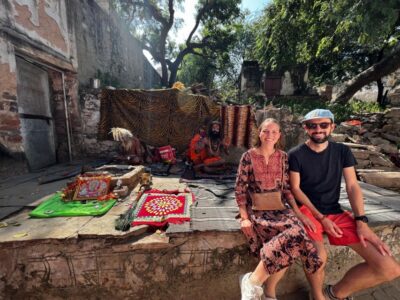
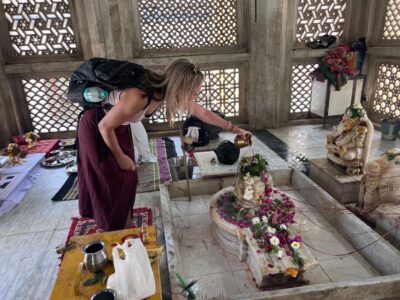
Spiritual Walking tour with Puja Ceremony -The Pushkar Route
Read our review →
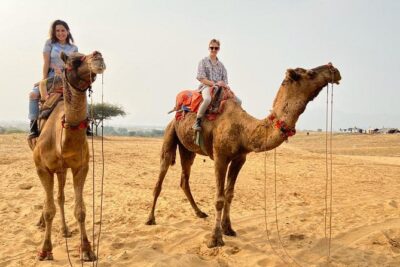
Pushkar Day Trip from Jaipur – Private Car, Safari, Guide & Lunch
Read our review →
Private Day Trip to Ajmer and Pushkar from Jaipur
Read our review →Browse the lists this tour appears in